


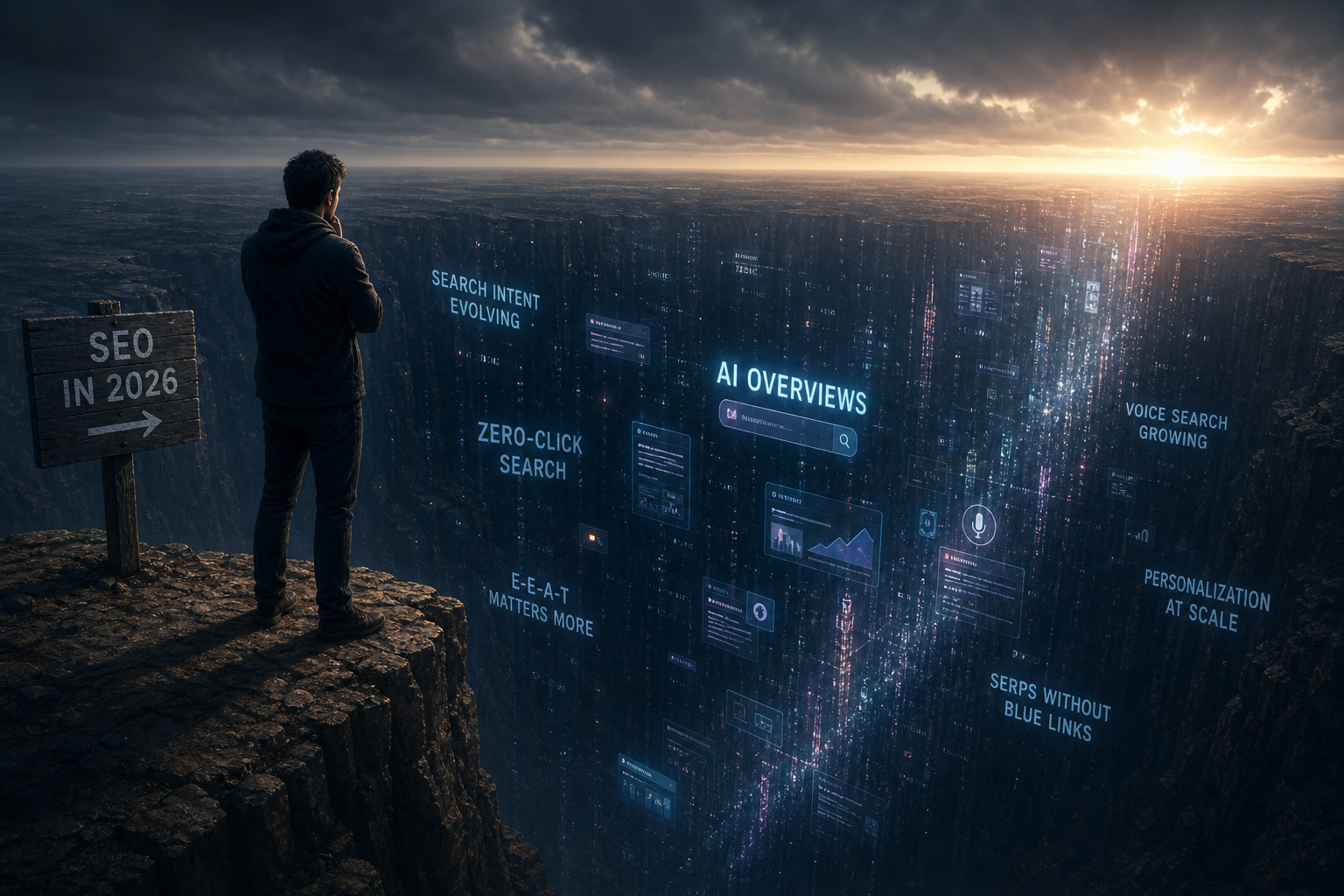
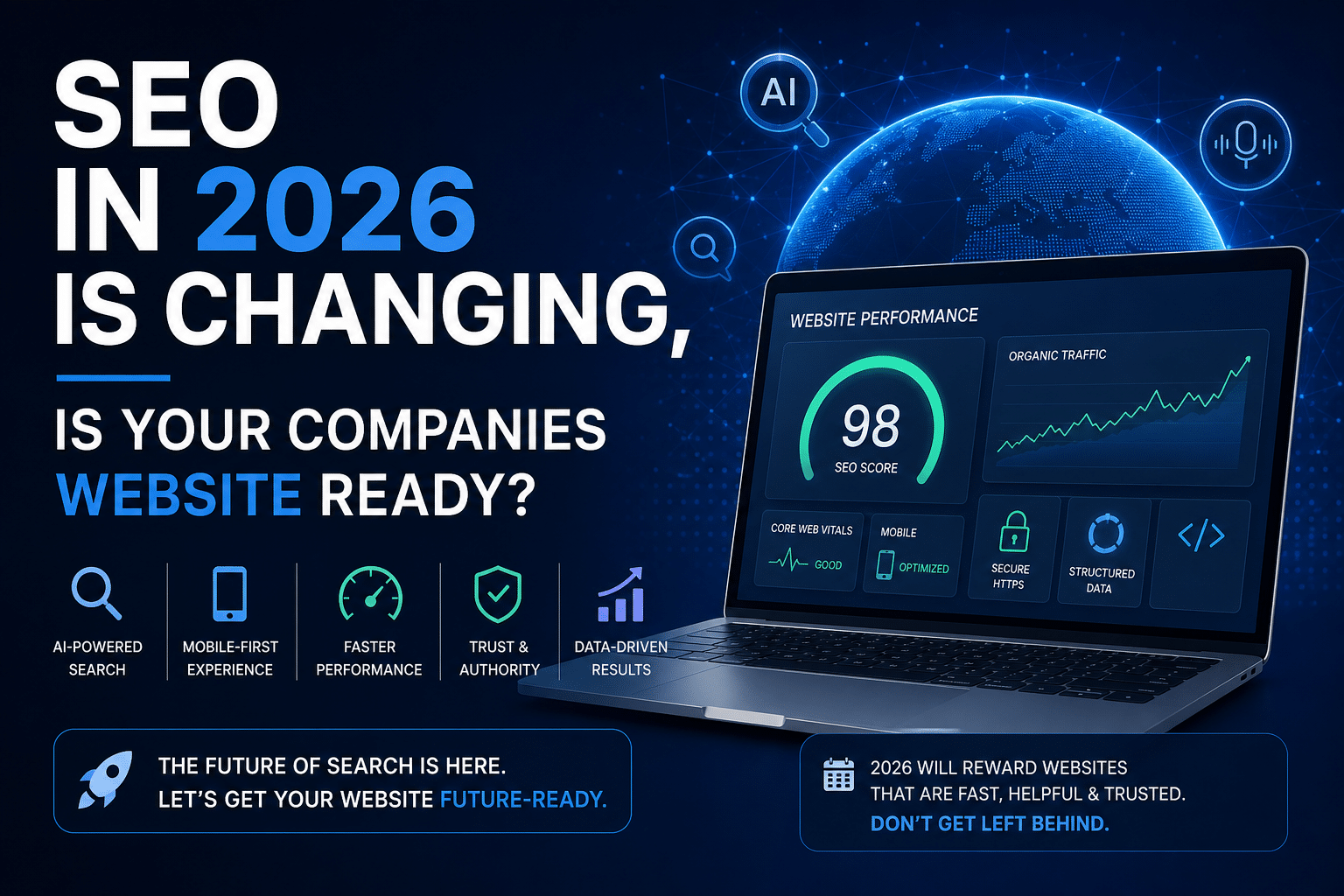
The post argues that SEO in 2026 depends less on tactics and more on a strong website foundation: technical health, clear site structure, intent-matched content, and trust signals. It emphasizes that rankings alone are not enough if a site does not convert traffic into leads.
It outlines what readiness looks like for different business types, including local service, e-commerce, B2B, and multi-location sites. The post recommends starting with an audit of key revenue pages, then improving performance, internal linking, content quality, and conversion paths.
If you run a business and you have been investing in SEO, you have probably felt this tension. You are doing the work, you are publishing content, and you are still not seeing the momentum you were expecting. Meanwhile, competitors seem to be climbing. Or maybe your site ranks for a few keywords, but it does not turn that traffic into calls, form fills, or bookings.
The frustrating part is that SEO can feel like it is always moving. But here is what I want you to take seriously, and also feel hopeful about, SEO in 2026 is changing in a way that makes the “right foundation” more important than ever. The websites that perform best are not the ones that chase random tactics, they are the ones that are built to earn trust, satisfy search intent, and deliver a strong experience for real people.
So the real question is not “Are you doing SEO?” The question is, “Is your website structured and organized to win in the way search is evolving in 2026?”
In this post, my team and I will walk through what is changing, what readiness looks like, and what I recommend you check first, so you are not scrambling later.
What’s Actually Changing in SEO in 2026
Search engines are still trying to solve the same problem they have always had, which is helping the searcher find the best answer as quickly as possible. What has changed is the environment around that problem. User expectations are higher, websites are more competitive, and the way people discover answers is expanding.
Search is becoming more answers based than link based. That does not mean links disappeared, but it does mean you cannot rely on a website being “somewhat relevant” and expect it to win. Google has to believe your page is the most helpful option, and it has to believe the entire site is set up to support that helpfulness.
You can see this in the way users behave. People click, they scroll, they bounce when a page does not deliver quickly, and they return to search. When that happens, your page is not just competing with other pages, it is competing with the experience of getting answers from somewhere else.
This is also where AI assisted discovery is starting to influence expectations. I am not saying you need to “optimize for AI.” What matters is that people still want clarity, context, and credible information. If your content feels generic, thin, or outdated, it is harder for your site to be treated as a trusted resource, no matter where someone encounters your brand.
Another major shift is that user experience is tied more directly to performance. If your site is hard to use on mobile, if pages load slowly, if navigation is confusing, or if forms are difficult, your SEO becomes more fragile. Even if you manage to get visibility, you may struggle to convert that visibility into leads.
Content quality continues to improve, and the bar keeps rising. It is not enough to publish something that broadly covers a topic. In 2026, content tends to perform better when it reflects real understanding, it answers the questions people actually have, and it is maintained as information and customer expectations change.
Finally, topical authority is harder to fake. A lot of websites still behave like they have a few random blog posts and a handful of service pages with minimal connection between them. In 2026, the strongest sites feel more connected. They cover a topic space in a coordinated way, and internal linking helps search engines understand how your pages support each other.
If you are a local business, none of this removes the importance of local SEO. It changes how you show credibility. Your website should reinforce who you serve, what you do, why your customers choose you, and how you solve problems for real people in real locations.
Is Your Website Ready? What “Readiness” Actually Looks Like
A lot of business owners think website readiness means “Does my site have the right keywords.” That is only a small part of it.
Readiness means your site is built to be understood and trusted. It means search engines can crawl and index the pages you want. It means your content is organized in a way that maps to intent. It means the experience is smooth, especially on mobile, and it means your pages support conversions, not just rankings.
Let me explain what I mean in plain terms.
Technical SEO readiness, the foundation you cannot skip
If search engines struggle to crawl your site, it does not matter how good your content is. Your priorities should be crawlability and indexing. Are your important pages blocked accidentally? Are there crawl errors creating dead ends? Is your sitemap clean and aligned with what you want indexed?
Site architecture matters too. When navigation and internal linking are messy, it becomes harder for both users and crawlers to understand what your business is truly focused on. Clean URLs, a logical hierarchy, and internal links that guide visitors to the next useful step all contribute to better performance.
Performance and mobile experience are also part of technical readiness. When a site feels slow or broken on a phone, people leave. And when people leave quickly, your pages do not get the opportunity to build trust. Your SEO can be affected, but your conversions will definitely be affected.
If you are not monitoring performance and user experience metrics, you are guessing. My team and I typically recommend focusing on the pages that already drive traffic and calls first, because that is where fixing speed and UX tends to produce the fastest business impact.
Content readiness, not just content quantity
In 2026, content that wins tends to be more specific, more useful, and more aligned with what a person is trying to do.
A ready website maps content to intent. Your service pages should clearly explain what you offer, what results look like, and what the process feels like. Supporting pages should answer the questions that naturally come up before a customer contacts you. If someone searches for a solution, your site should guide them through the decision process, not just drop them on a single blog post and hope for the best.
Topical authority is built when your website covers the subject area in a connected way. That means your main money pages have support. Your blog or resources content links back to the services where it matters. Your internal linking creates a logical path.
Content also needs maintenance. If your pages are outdated, references change, and your competitors publish better versions, your old content can quietly lose momentum. Readiness in 2026 is the ability to update and improve.
On page SEO readiness, clarity for users and signals for search engines
On page SEO is not only about titles and keywords. It is about clarity. It is about making sure the page delivers on the promise that your title creates.
When headings are structured clearly, readers can scan and understand the value quickly. When the content is organized in a logical flow, the page is easier to consume, and it is easier for search engines to interpret.
Image optimization matters as well. It impacts page speed and accessibility. Alt text should describe the image for users who rely on it, and images should be compressed so your site does not lose performance unnecessarily.
FAQs are another part of readiness. If your customers ask the same questions repeatedly, adding those answers on the page helps both your visitors and your content depth. Done well, FAQs reduce friction and increase the chances someone moves forward.
Trust and authority readiness, what makes people believe you
This is where many websites fall short. They want rankings, but they do not build enough credibility in a visible way.
Trust is built into your content and your site design. Your website should clearly show who you are, why you are qualified, and what differentiates your business. That can include author or business identity, proof of results, and real examples of your work.
Testimonials are helpful, but they work best when they feel specific and tied to real outcomes. Case studies are even stronger because they explain the process, the challenge, and how you handled it.
If you serve specific locations, that local trust should show up consistently. Your website should reflect your service areas, your experience with local conditions, and practical details that make you feel like a real option, not a generic company.
Conversion readiness, because ranking without leads is frustrating
This is the part that business owners sometimes ignore until it hurts.
If your SEO traffic comes in but your website does not convert, your growth stalls. Your pages should support the next step. That usually means your primary landing pages should have clear calls to action, clear pathways to contact, and messaging that matches what visitors are expecting after they click.
Forms should feel simple and reasonable. Your phone number should be easy to find. Your contact page should not feel like a dead end. If you offer something like scheduling, estimates, or consultations, your site should reduce friction and explain what happens next.
In 2026, conversion and SEO are connected. A page that brings in the wrong audience might still get clicks, but it will struggle to generate leads. That mismatch is often the real problem.
Common SEO Mistakes That Keep Websites from Being 2026 Ready
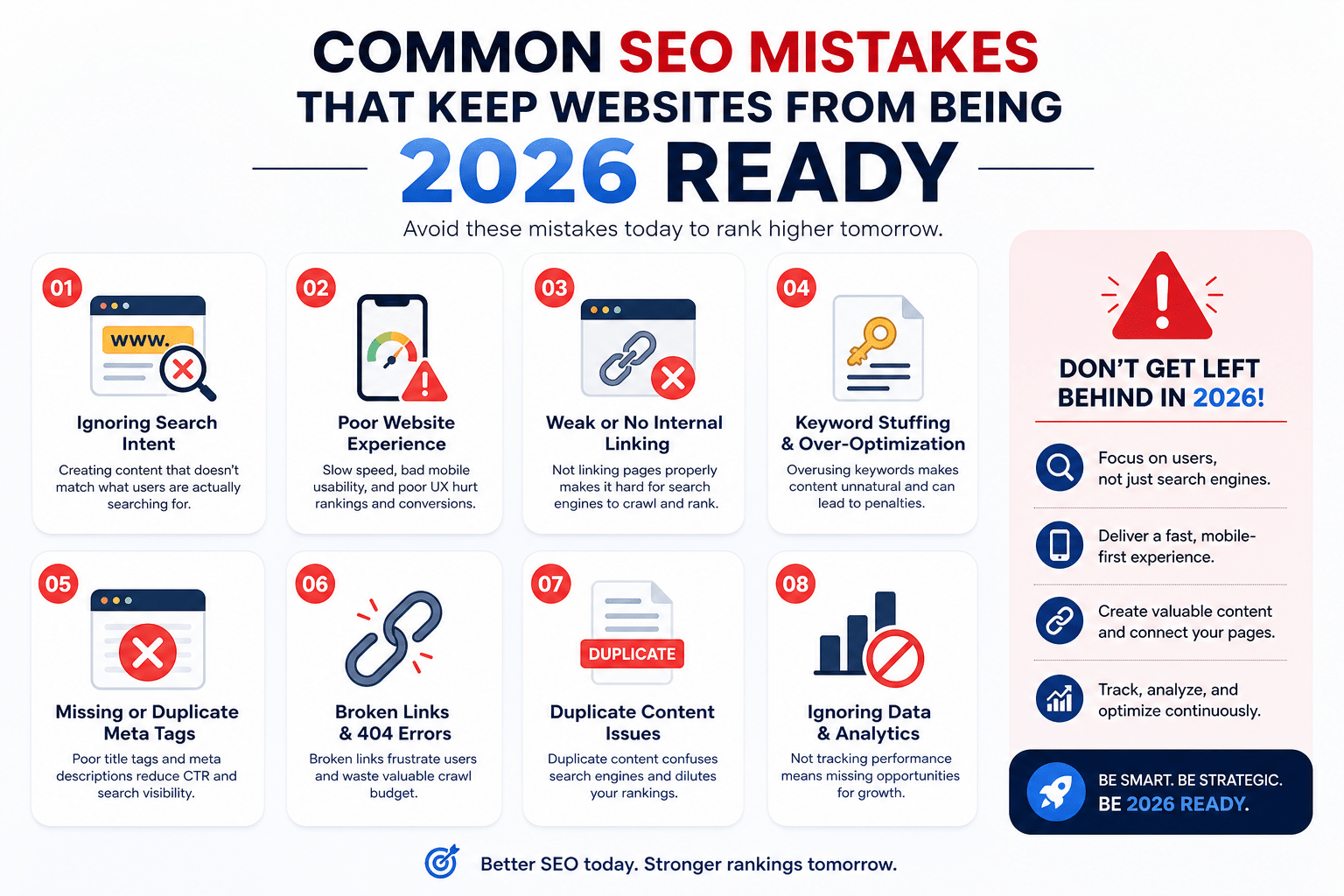
One of the biggest mistakes I see is that business owners have content, but it is not organized around how people actually decide. The site might have pages that talk about topics, but the internal structure does not connect those pages to the service decisions customers are making.
Another common issue is that rankings happen inconsistently, and business owners assume the solution is “more content.” Sometimes the content is not the problem. Sometimes it is the on page clarity, the internal linking, or the conversion flow that is preventing that traffic from turning into business.
Performance issues are also frequent. A site can technically work, but if it feels slow or awkward on mobile, the user experience will quietly block success.
Finally, a lot of websites publish but do not improve. Publishing is good, but updating is what makes your content durable. In 2026, readiness includes having a plan for what you will revisit and strengthen over time.
What I Recommend Doing First, so You Are Not Overwhelmed
If you want a simple starting point, my team and I recommend beginning with a baseline audit focused on the pages that matter most for revenue.
First, we look for technical barriers, crawl issues, and indexing problems that prevent the right pages from getting traction. Then we review priority pages, the ones that should be driving leads. We evaluate whether the intent match is strong, whether the content is structured clearly, and whether internal linking supports the topic ecosystem you are trying to build.
After that, we focus on the changes that usually produce the greatest impact quickly. That often includes performance improvements, better on page clarity for service pages, stronger internal links between services and supporting content, and improving the conversion path on the pages where traffic already lands.
Once the foundation is stable, then we build topical authority. That means we refresh older pages, create supporting content that truly helps customers, and connect it intentionally to your service pages so the entire site becomes more understandable as a system.
SEO Strategy for Different Business Types, What Changes and What Stays the Same
If you are a local service business, your website needs to communicate credibility and clarity fast. People search because they need help, and they want to know that you can solve their problem. Service pages, location relevance where appropriate, FAQs, and proof are critical.
If you run an e-commerce site, readability and shopping experience matter just as much as content. Category structure, product page clarity, and performance can make the difference between visitors browsing and visitors buying.
If you are a B2B company, readiness often means building pages that support decision stages, like comparisons, process explanations, and trust focused content. Your website should help buyers feel confident, not just informed.
If you operate multiple locations, readiness means your location pages and internal structure cannot feel duplicate or shallow. Each location should be supported with unique value so search engines understand why those pages deserve visibility.
FAQ
Do I need to change my SEO strategy for 2026?
You do not have to scrap everything, but you do need to align with the priorities search engines and users respond to in 2026. That includes better user experience, stronger intent alignment, clearer site structure, and content that stays updated.
How long does it take to see SEO improvements?
It varies based on how competitive your industry is, how broken your foundation is, and how much you improve. Technical fixes and experience improvements can sometimes show earlier movement. However, meaningful ranking and lead growth often takes a few months.
What is more important in 2026, content or technical SEO?
Both matter. If technical SEO is broken, great content will struggle. If content does not satisfy intent or does not build trust, technical improvements will not be enough. My team and I typically prioritize foundation first, then topical authority.
If my site already ranks, do I still need an audit?
Yes. Rankings can hide problems. Your site might rank for certain terms but convert poorly, or it might be vulnerable to future changes because of performance issues, weak structure, or outdated content.
What are the fastest wins for local businesses?
Often the fastest wins come from improving service page clarity, strengthening internal linking, tightening mobile performance, adding or enhancing FAQs, and removing friction from conversion paths, especially on mobile.
Should we rebuild our website for SEO reasons?
Not always. Many SEO issues are rooted in structure, performance, and content alignment rather than the need for a full rebuild. That said, if your current site causes major UX problems or limits how your content can be organized, rebuilding can be justified. We usually recommend auditing first so you do not spend unnecessarily.
Conclusion, Is Your Website Ready for SEO in 2026?
SEO in 2026 is changing, but readiness is something you can control. You do not have to guess what Google wants, you just need to build a website that makes sense for users and for search engines.
If you focus on three core areas, you will be in a much stronger position.
You need the technical foundation to be solid, you need content that satisfies intent and builds topical authority, and you need conversion focused user experience so your traffic becomes actual business.
If you want help confirming where your website stands, my team and I can run an SEO readiness review and give you a clear plan for what to fix first.
If you tell me what your business does and whether your goal is calls, form leads, or bookings, I will also help you identify the best starting point for your website pages and SEO strategy.

